

Your teams want to experiment with AI. Legal says slow down. Security says stop. Business units say hurry up. And somewhere in the middle, a dozen unsanctioned AI tools are already in production — deployed by people who got tired of waiting.
I’ve lived this paradox for years as a CTO in one of Germany’s most security-sensitive federal agencies. The tension between innovation speed and institutional control isn’t new. But with AI, it’s sharper than ever. And the organizations that don’t resolve it will find themselves stuck between two equally dangerous outcomes: paralysis or chaos.
The question isn’t whether your people will experiment. They already are. The question is whether you’ve given them a safe lane — or forced them into the shadows.
The gatekeeper trap
Here’s what happens in most large organizations. A team identifies a promising AI use case. They build a prototype. Then they hit the governance wall: no approved tools, no reference architecture, no clear path to production. The pilot stalls. Meanwhile, three other teams quietly spin up their own solutions using whatever SaaS tool has the friendliest onboarding flow.
This is AI sprawl. And it’s the predictable result of governance that says “no” without offering an alternative.
Heads of Enterprise Architecture are uniquely positioned to break this cycle. Not by loosening standards, but by creating reusable pathways — clear architectural blueprints that make it easier to do the right thing than the wrong thing.
This is a mindset shift. From blocking unapproved initiatives to enabling approved ones. From reviewing every request to publishing a catalog of pre-validated patterns. How many of your teams could start an AI pilot tomorrow using only approved tools and documented patterns? If the answer is “none,” your architecture isn’t enabling anything.
Build the blueprint before the pressure hits
The first concrete step: create an AI reference architecture grounded in both business strategy and technical reality. That blueprint should define common use cases, approved technology stacks, deployment patterns for cloud and on-premises environments, and security controls with privacy requirements baked in.
In my experience, the organizations that move fastest are those that did this work before the first AI pilot landed on the CTO’s desk. The ones that scramble to build governance after a dozen pilots are already running? They end up with a patchwork of contradictory rules and frustrated teams.
A solid approach follows roughly ten steps — from understanding your strategic context and defining AI principles, through building your technology reference model and standards, all the way to designing your decision tree for when to build, buy, or partner. But here’s what matters most: you don’t need perfection. You need a first version.
A reference architecture that covers 80% of common scenarios and ships in four weeks beats a comprehensive framework that takes eight months. Start with your most frequent use cases. Add guardrails for data privacy and model deployment. Publish it. Iterate.
Security isn’t a phase — it’s a foundation
Security controls must be designed from the outset, not retrofitted. This sounds obvious. In practice, I’ve seen it ignored more often than followed.
Every AI system should undergo threat modeling before deployment. Frameworks like MITRE ATLAS (purpose-built for AI and machine learning threats) and the NIST AI Risk Management Framework are solid starting points. OWASP’s Top 10 for LLM Applications and ENISA’s AI Threat Landscape add useful depth. But the framework matters less than the discipline of actually doing the assessment — and doing it early enough to influence design decisions.
What deserves more attention is data governance. The quality and security of training data is where many AI projects silently fail. Architecture teams should work closely with data and analytics stakeholders to identify and prepare datasets before experimentation begins. Waiting until a model is half-trained to discover the data violates privacy regulations is an expensive lesson. I’ve watched organizations learn it the hard way.
One promising development for regulated environments: synthetic data — machine-generated datasets that mimic real-world scenarios without exposing sensitive production data. It can accelerate experimentation significantly, provided strict boundaries between sandbox and production environments are maintained.
And then there’s shadow AI — the unsanctioned use of AI tools that bypass every policy you’ve written. Without strong governance, shadow AI introduces data breaches, regulatory violations, and unintended bias. The principle of least privilege isn’t just a security concept here. It’s a governance survival strategy.
Your AI agents need identity cards
Here’s a blind spot that too few architecture teams address: identity and access management for AI systems.
Traditional IAM was designed for humans. Log in, get a role, access resources. But AI agents don’t log in. They operate autonomously, often on behalf of users, sometimes chaining actions across multiple systems. If you don’t assign a clear identity to every AI agent and service account — with traceable ownership back to a responsible human — you’ve built a compliance nightmare.
What’s needed: robust authentication using tokens or certificates, fine-grained authorization based on least privilege, and comprehensive logging of every action. In regulated industries, every action an AI agent takes must be auditable. Every delegation of authority must be traceable.
Credential lifecycle management matters too. Automated provisioning, rotation, and deprovisioning of machine credentials sounds like plumbing. It is plumbing. And when the plumbing fails, the flood reaches the boardroom.
Governance needs people, not just policies
The final piece — and perhaps the most underestimated — is cross-functional collaboration. An AI governance forum should bring together enterprise architecture, legal, security, data science, product management, and executive leadership. With real decision authority. Not advisory status.
I’d add a warning from experience: these forums only work if they meet regularly and have teeth. I’ve seen too many “AI boards” that convene quarterly, rubber-stamp decisions made months earlier, and wonder why shadow AI keeps spreading.
What works better: tight feedback loops. Daily stand-ups during critical implementation phases. Retrospectives after each pilot. Legal advisors who review data handling during design, not after launch. Security experts who validate controls before deployment, not in the incident report.
The Head of EA should be the orchestrator — not the sole decision-maker, but the person who ensures the right stakeholders are in the room at the right time. When legal, security, data, and business teams operate in silos, AI governance becomes a bureaucratic exercise. When they collaborate early and continuously, it becomes a competitive advantage.
The real question behind all of this
The four pillars — standardized architecture, security-first controls, AI-specific identity management, and cross-functional governance — cover the essential ground. But frameworks don’t transform organizations. Execution does.
The deeper question for every Head of EA reading this: are you enabling experimentation, or are you just managing risk on paper?
If your teams can’t go from AI idea to approved pilot in under four weeks, your architecture isn’t enabling anything. If no one knows which tools are approved for which use cases, your governance exists only in documents. If your AI agents don’t have registered identities, your security posture has a gap that grows with every new deployment.
The organizations that will lead in AI aren’t the ones with the most sophisticated frameworks. They’re the ones where the architecture team made it easy to experiment safely. And that, in my experience, is the hardest thing to get right — not because it’s technically complex, but because it requires letting go of the gatekeeper role that made us feel important in the first place.
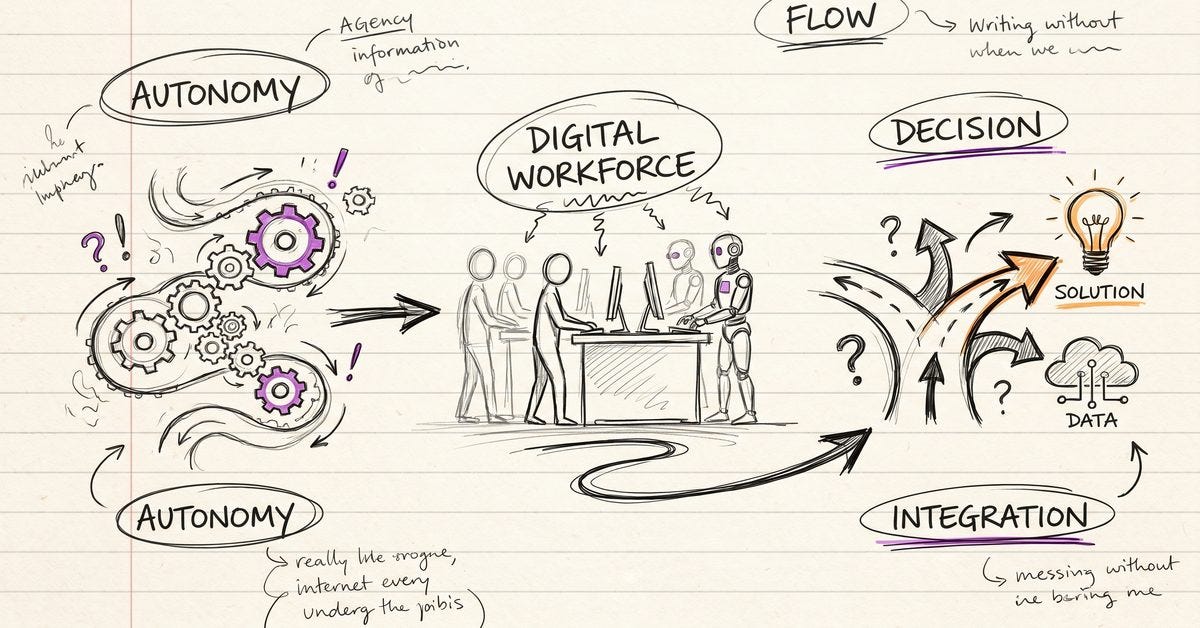
Before you close this tab — here’s your practical takeaway.
✅ Publish a first-version AI reference architecture within 30 days — cover your top 3 use cases, approved stacks, and security baselines. Perfection later, momentum now.
✅ Inventory every AI tool and agent currently in use across your organization — you can’t govern what you can’t see.
✅ Mandate threat modeling for all AI initiatives before deployment, using MITRE ATLAS or NIST as your starting framework.
✅ Register every AI agent and service account with a named human owner — no orphaned machine identities.
✅ Establish an AI governance forum that meets at least biweekly with actual decision authority — not a quarterly rubber-stamp committee.
✅ Prepare curated, validated datasets for experimentation before teams ask for them — proactive data governance beats reactive firefighting.
✅ Measure your time-to-approved-pilot — if it’s longer than four weeks, your architecture is a bottleneck, not an enabler.
If this gave you one idea worth testing — consider subscribing. I publish weekly with practical frameworks for AI leaders who need clarity, not hype.
Have you found a way to balance speed and security in AI experimentation that actually works — or is your organization still stuck between "block everything" and "hope for the best"? Let me know in the comments.
I also write in-depth analysis in German on my blog: www.lezgus.de